
NI-CR Panel Manufacturer and Supplier in India
Panels for NI-CR Penetrant Testing By URSAA- Trusted Distributors and Providers in Mumbai, Maharashtra
URSA Associates supplies Rochem NI-CR Panels, essential accessories designed to assess the effectiveness of penetrant testing during routine system inspections. These panels facilitate the evaluation of water-washable or post-emulsifiable PT tests and are available in 10, 20, 30, and 50-micron sizes.
Boost conversions on your product page with a short, compelling form call‑to‑action: “Ready to enhance your NDT quality control with precision‑graded Ni‑Cr Panels? Contact URSAA today for a tailored quote as well as expert support.
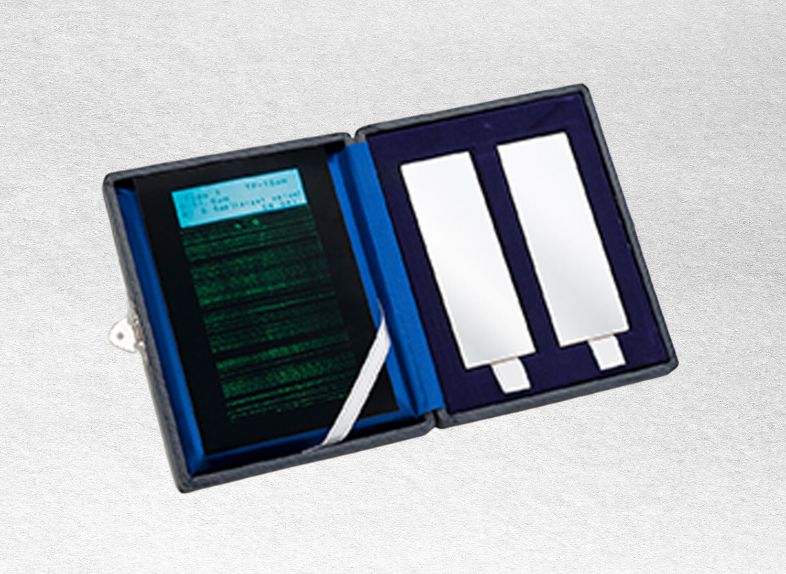
Features
- Materials: An alloy of nickel and chromium, expertly manufactured.
- Options for Thickness: 10, 20, 30, and 50 microns are among the variations.
- Performance Verification: Consistent use for sensitivity analysis and system inspections.
Uses
- Performance checks: Used for regular evaluations to keep penetrant testing systems reliable.
- System Calibration: Facilitates equipment calibration for precise and reliable outcomes.
- Sensitivity Evaluation: Offers a framework for assessing PT testing systems' sensitivity.
How to Use Regular Checks:
Include NI-CR Panels in regularly planned system inspections to ensure continuous performance tracking.
- Calibration: To guarantee accurate results, use the panels for equipment calibration.
- Verification of Performance: To assess the penetrant testing system's sensitivity, pay attention to the panel indicators.
Boost the Accuracy of Your Penetrant Testing
For dependable and consistent findings, integrate NI-CR Penetrant Testing Performance Panels into your quality assurance procedures. Your penetrant testing systems' continued accuracy is enhanced by regular use.
Frequently Asked Questions
1. What is a Ni‑Cr Panel?
Ans: A Ni‑Cr Panel is a brass substrate plated with a controlled thickness of nickel‑chromium alloy. It is specially stressed to produce linear cracks for penetrant sensitivity testing. These panels help evaluate the effectiveness of dye as well as fluorescent penetrant systems.
2. What standards do Ni‑Cr Panels conform to?
Ans: Ni‑Cr test panels typically conform to international standards such as ISO 3452‑3 as well as JIS Z2343‑3. This define Type‑1 reference blocks for penetrant inspection quality control.
3. What crack depths are available?
Ans: These panels are available with predefined crack depths like 10 μm, 20 μm, 30 μm as well as 50 μm. This allows testing at multiple sensitivity levels for different penetrant products.
4. How is a Ni‑Cr Panel used in testing?
Ans: Before use, the panels are cleaned as well as dried. One panel is tested with new penetrant material as well as another with working material. Differences in indications help assess material performance & also degradation.
5. Can Ni‑Cr Panels help compare different penetrant systems?
Ans: Yes since twin panels with identical crack patterns are provided, they allow direct comparison of performance between new as well as in‑use penetrant liquids or different penetrant systems.
6. How should these panels be maintained?
Ans: After testing, panels should be thoroughly cleaned to remove residual penetrant as well as developer materials. Proper care helps maintain panel integrity as well as accuracy over repeated uses.